


SUMMIT AT PLAY
THE EMERALD COAST
Sardinia’s Radical Experiment in Luxury & Restraint
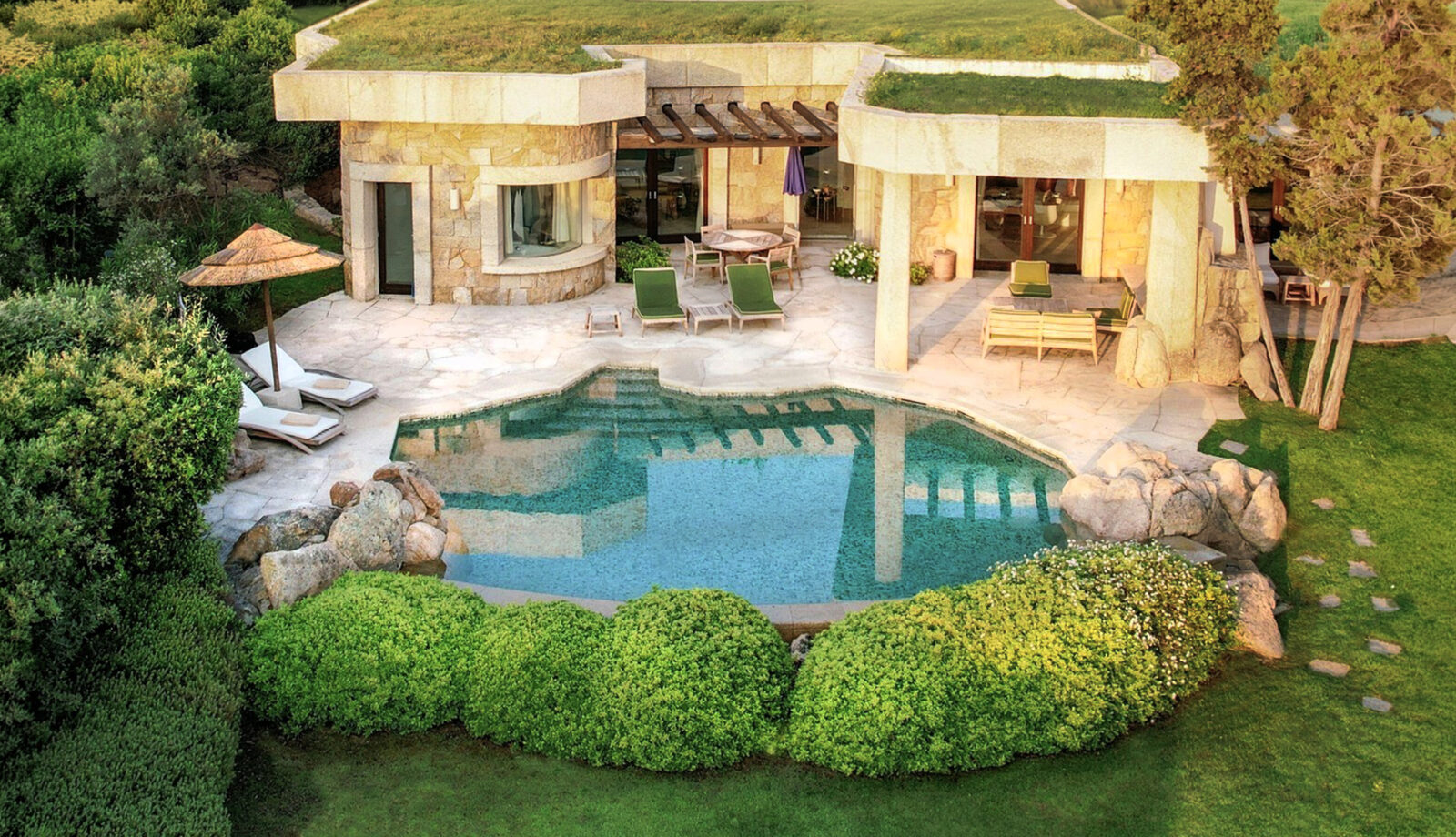
There is a stretch of northeastern Sardinia where architecture does not announce itself. It does not sit on the landscape. It disappears into it, carved from the same granite it rests upon, colored in the same muted tones as the Mediterranean scrub, shaped by the same wind that bends the juniper trees along the shore.
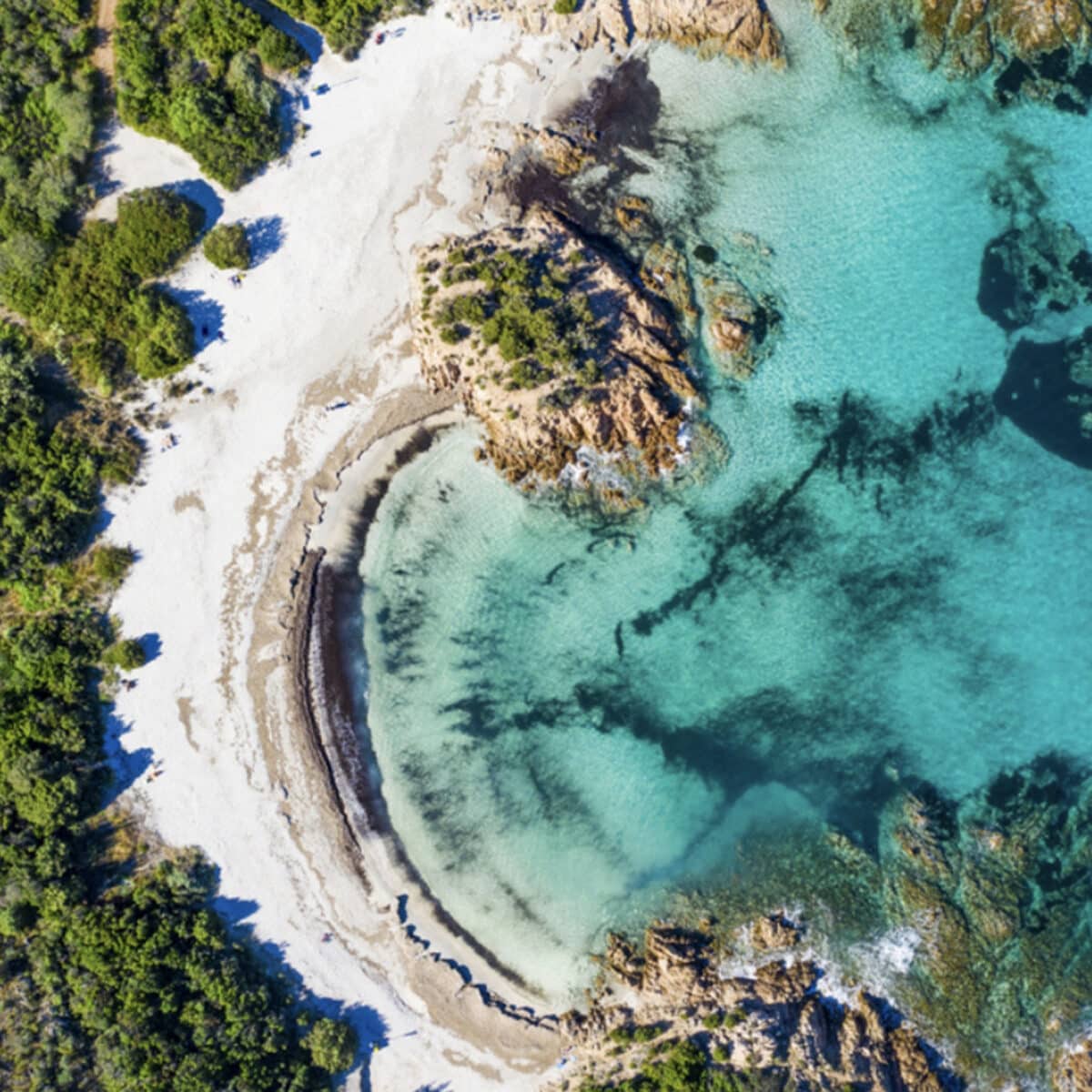
This is the Costa Smeralda, and its story begins in 1962, when a 26-year old prince arrived by sailboat at a coastline so wild and so beautiful that he decided to protect it by building on it, but only on his terms.
Prince Karim Aga Khan IV had a vision that was radical for its time: luxury development that preserved rather than exploited the land. With a consortium of investors, he acquired more than 3,000 hectares of Gallura coastline and established an Architectural Committee to govern every structure built upon it. The committee’s mandate was simple and uncompromising: nothing would dominate the landscape. Everything would belong to it.
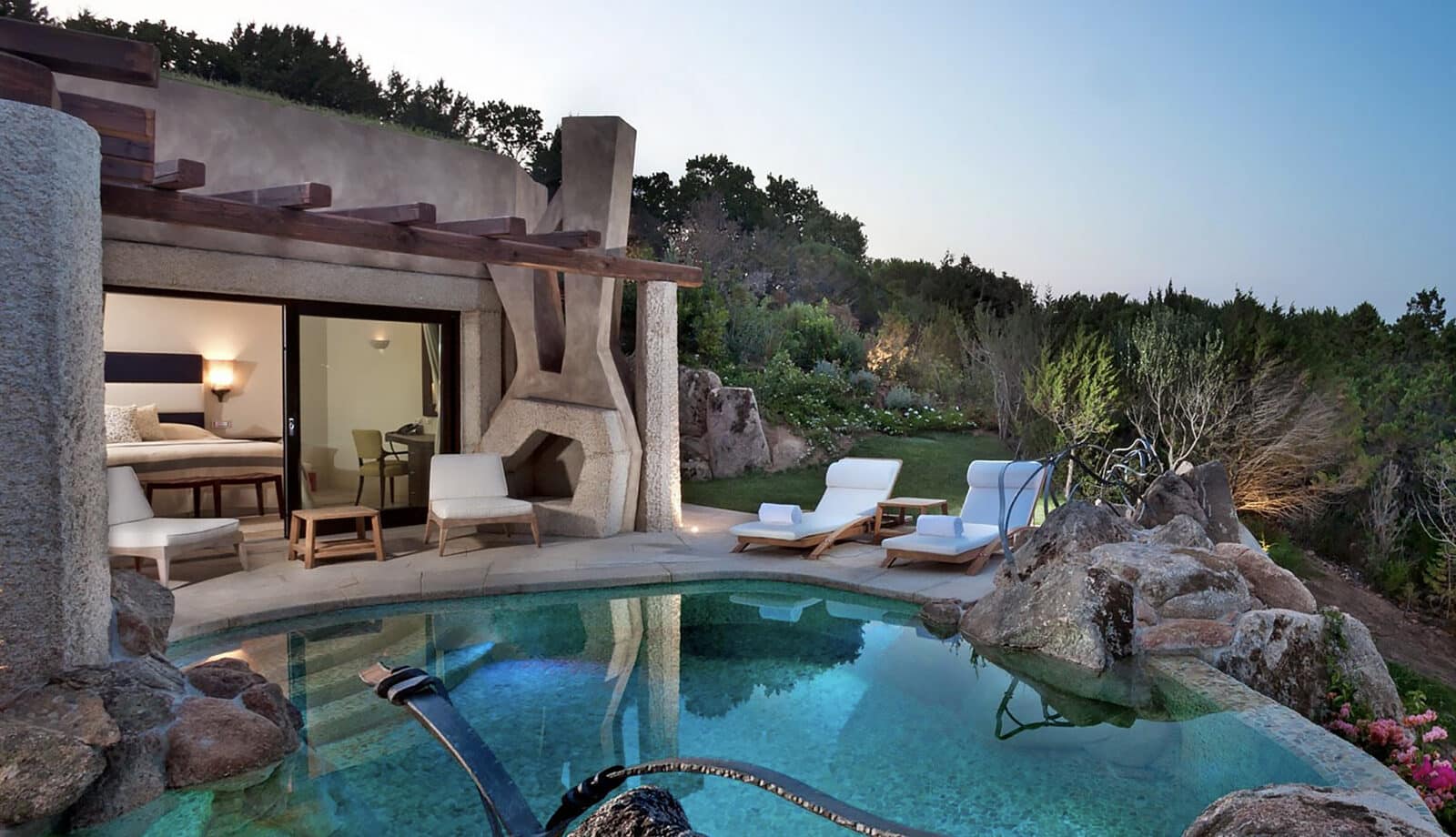
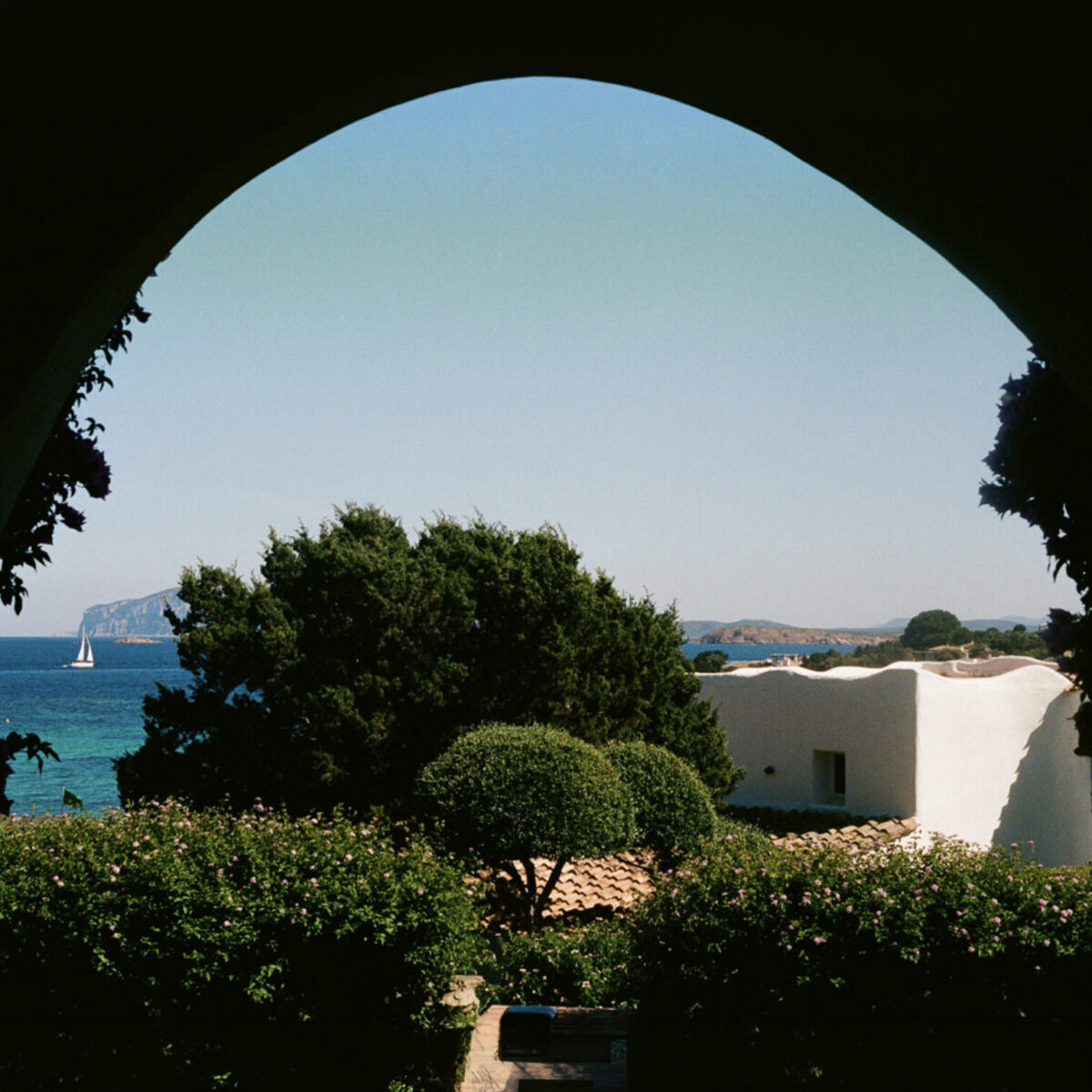
The architects he chose became the authors of what is now known as the stile smeraldino, the Emerald Style. Luigi Vietti designed the village of Porto Cervo and the Hotel Pitrizza, using local granite, precious wood, and rough-plastered surfaces in pastel tones that made his buildings feel as though they had always been there. Jacques Couëlle, the visionary French architect, created the Hotel Cala di Volpe as a dreamlike interpretation of a Mediterranean fishing village, its arches and towers and pastel walls a piece of pure architectural theater. Michele Busiri Vici’s work at Hotel Romazzino channeled the white-walled, domed forms of North African and Greek island architecture into something entirely Sardinian.
Together, they invented an architectural language defined by curves rather than angles, by materials drawn from the site rather than imported to it, and by a relationship between structure and landscape so intimate that the buildings seem to have grown from the rock rather than been placed upon it.
Sixty years later, the Costa Smeralda remains one of the most controlled and least compromised luxury destinations in the world. Ninety-six percent of its land is green, open, and unspoiled. The Architectural Committee still reviews every intervention. And the original design principles (local materials, low profiles, buildings that defer to the coastline) endure as gospel.
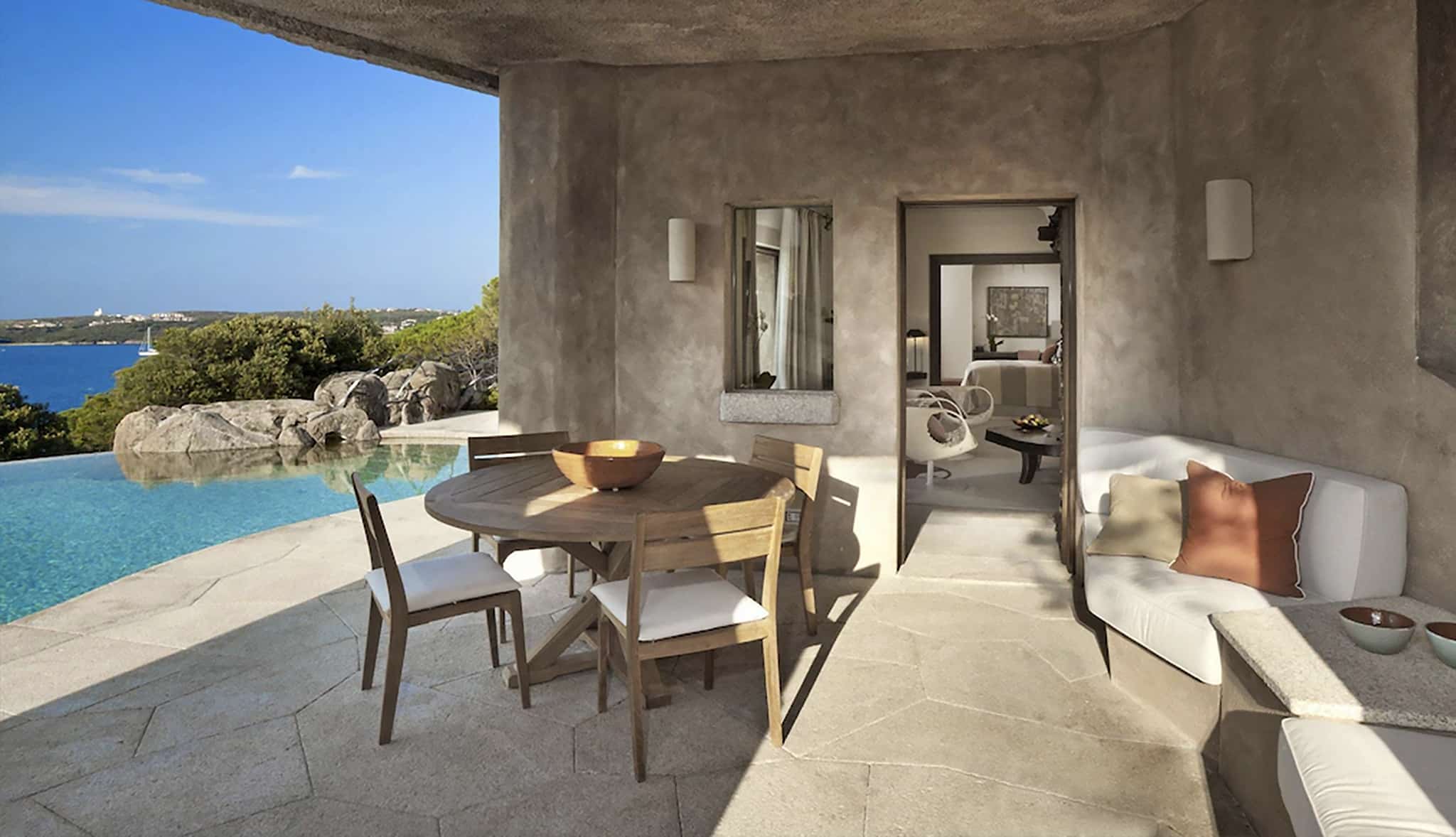
Hotel Pitrizza, Vietti’s intimate masterpiece on the bay of Liscia di Vacca, embodies this philosophy in its purest form. Its villas are scattered across the rocky headland like a cluster of ancient stone houses, connected by garden paths and framed by hibiscus, olive, and juniper. The hotel’s famed swimming pool is carved directly from Sardinian granite, its edge dissolving into the sea beyond. On its terraces, Summit furniture furnishes the outdoor spaces where guests dine and lounge against a backdrop of crystalline water and weathered stone. It belongs here as naturally as the granite beneath it.
The property is now entering its next chapter. LVMH has signed an agreement to manage Pitrizza under its Cheval Blanc brand, with a renovation and rebranding planned for the coming seasons. It is a transition that speaks to the enduring appeal of the Aga Khan’s original vision: even the world’s most powerful luxury conglomerates recognize that what makes the Costa Smeralda extraordinary is not what was added to it, but what was preserved.
Across the Mediterranean and beyond, the idea that luxury and restraint are not opposites but partners is gaining ground in architecture, in hospitality, and in the way we furnish the spaces where we live outdoors. On the Costa Smeralda, that idea is not new. It is the foundation everything was built upon. •